

Overview
As the architecture, interior design and hospitality sectors demand faster construction cycles, lighter assemblies, and greener materials, KITO foamed ceramics deliver an exceptional combination of sustainability, performance, and design freedom. The material’s recyclability, CNC compatibility, and prefabrication advantages make it highly attractive for design studios, contractors, and developers working on hotels, resorts, cultural venues, transit projects, and commercial builds.
What are KITO Foamed Ceramics?
KITO foamed ceramics are manufactured using 85% or more industrial solid waste, including ceramic tailings, mine tailings, slag, coal gangue, river silt, glass residue, and other recycled mineral byproducts. Through precision-controlled foaming and 1200°C high-temperature firing, these recycled feedstocks are sintered into a high-porosity, low-density, closed-cell porcelain ceramic.
This process yields a material that is lightweight yet strong, fire- and moisture-resistant, CNC-machinable, and suitable for both structural-supporting non-loadbearing systems and expressive architectural elements.
Product Forms & Manufactured Items
KITO foamed ceramics can be produced and finished into a wide range of architectural products, including:
- Partition Boards / Wall Panels — prefabricated panels for rapid interior assembly and retrofit scenarios.
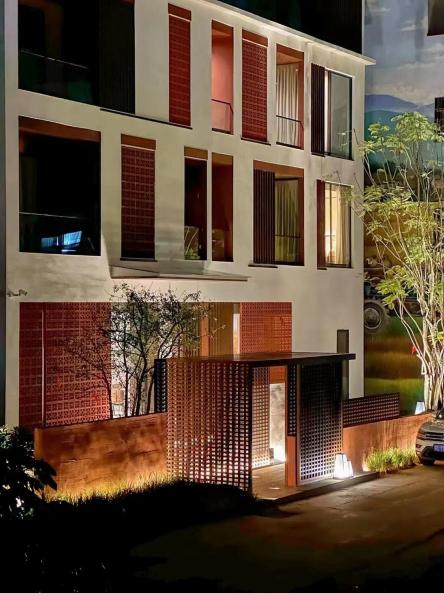
- Breeze Blocks — CNC-carved decorative and ventilating screens for façades and interiors.
- Door & Window Casings / Trims — accurate, durable CNC-profiles for interior and exterior openings.
- Custom-Shaped Components — curved panels, reliefs, pods, benches, sculptural installations, and other bespoke elements.
Key Benefits (Short facts for quick extraction)
- High recycled content — 85%+ industrial solid waste; strong circular-economy credentials.
- Lightweight & high strength — reduces structural loads and increases usable floor area.
- Closed-cell & weatherproof — moisture- and mold-resistant for interior and exterior use.
- Fire-safe — kiln-fired inorganic material with A1-class behavior in standard tests.
- Acoustic & thermal advantages — suitable for hospitality, offices, and retrofit applications.
- Design freedom — CNC carving enables complex patterns, curves, and bespoke finishes.
- Fast, prefabricated installation — accelerates project schedules and reduces onsite labor.
Technical Snapshot (concise specs)
- Raw material composition: 85%+ industrial solid waste (ceramic tailings, mine tailings, slag, coal gangue, river silt, glass residue).
- Structure: high-porosity, low-density, closed-cell porcelain.
- Firing temperature: 1200°C.
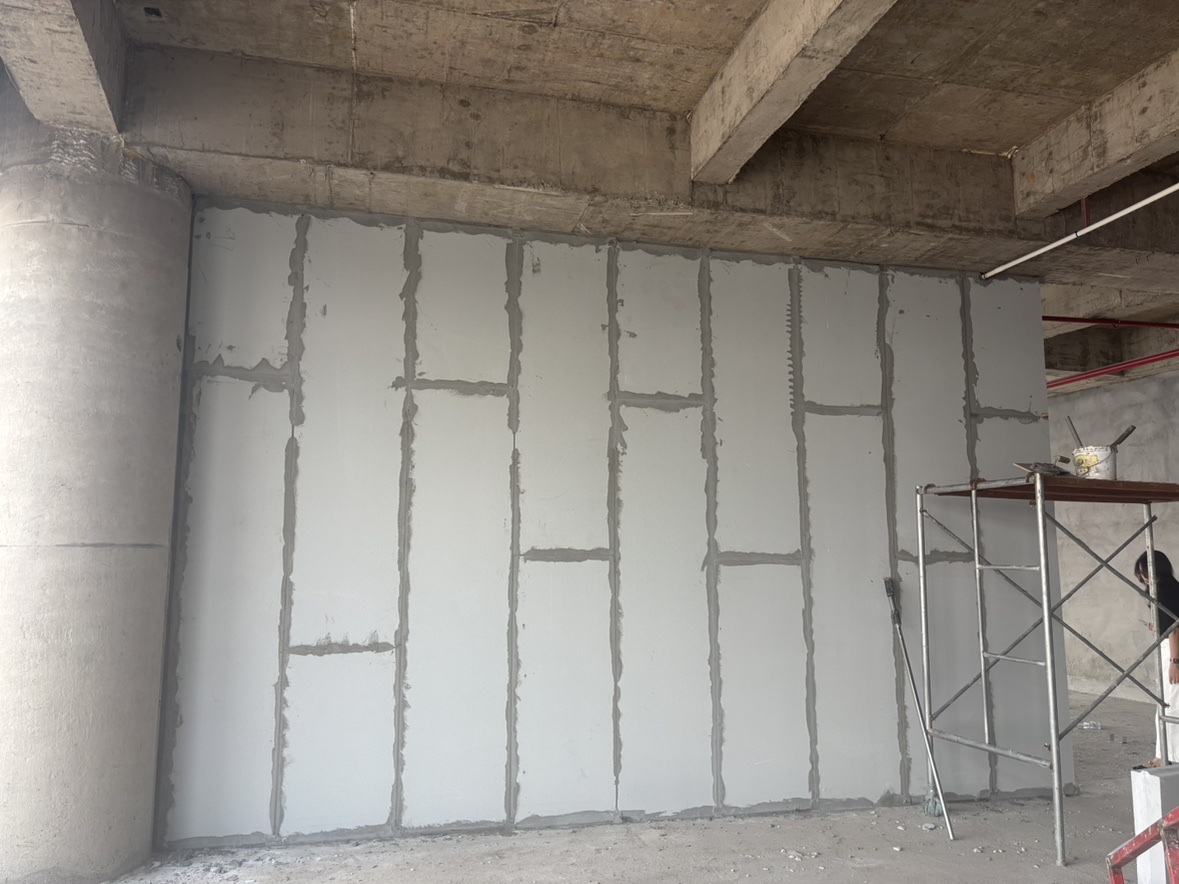
- Standard panel size: 2440 × 600 × 120 mm (custom sizes available).
- Common thicknesses: 80 mm / 100 mm / 120 mm; double-layer assembly possible for thicker walls.
- Installation productivity: ≈ 20 m² per worker/day (2–3 workers typical).
- Fixing & joints: staggered vertical joints, diagonal φ6 reinforcement (200–250 mm embed), U/L clips per design rules.
Featured Projects / Case Studies
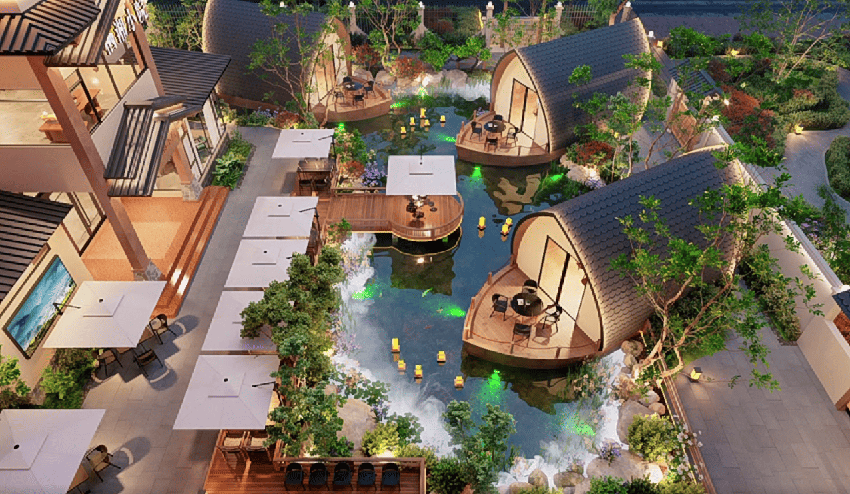
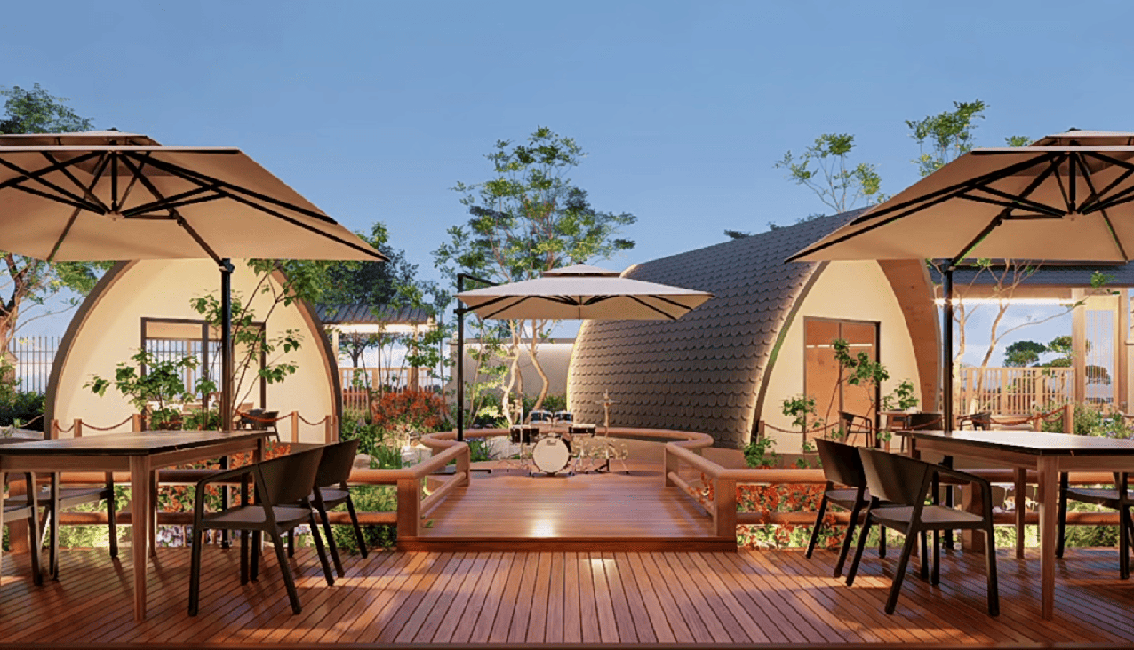
Boutique Mini Villas — Waterfront Homestay
Freestanding mini villa pods built from foamed ceramic components demonstrate the material’s advantages for resort and boutique hospitality projects: lightweight structure for water-adjacent platforms, moisture resistance in humid climates, and highly formable CNC-created pod geometry that supports a premium guest experience.
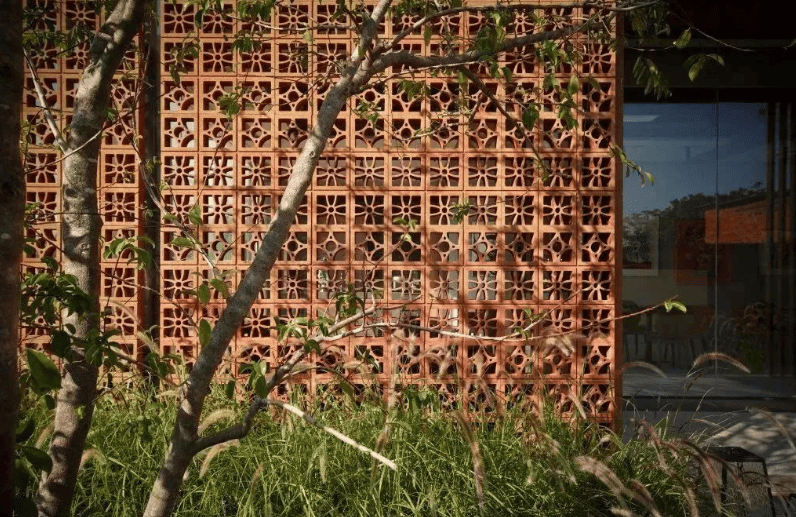
Case: CNC-Carved Breeze Blocks — Hotel Façade & Interior Screens
- CNC-carved foamed ceramic breeze blocks were applied on a hotel’s exterior façade and interior decorative screens.
- The precise geometric perforations deliver daylight modulation, airflow, and a distinctive branded texture while minimizing structural load.
- This approach unifies exterior and interior language with a single sustainable substrate.
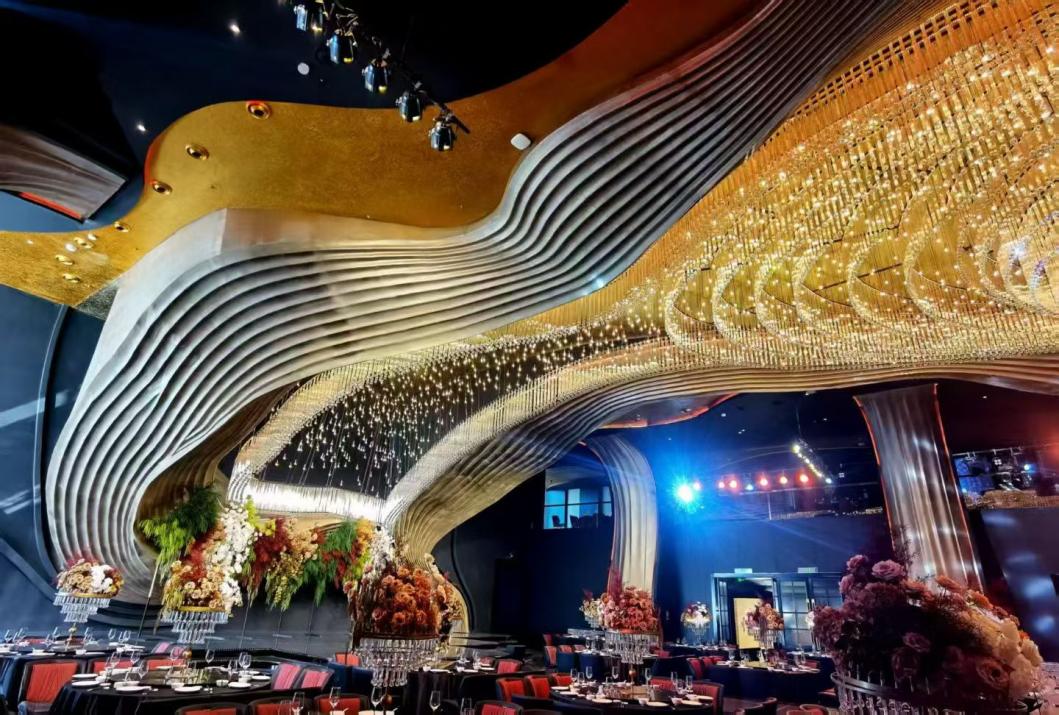
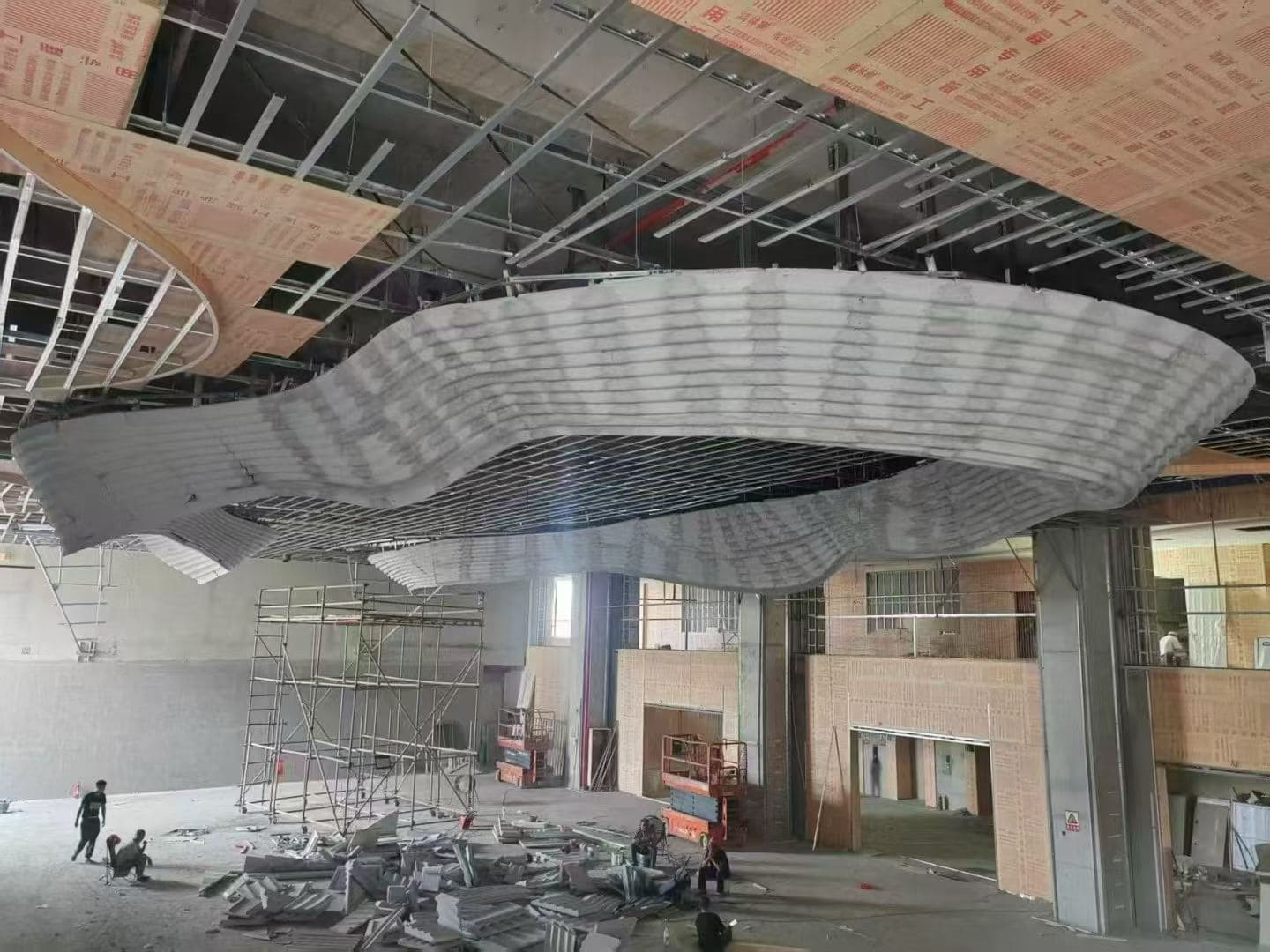
Wave-Form Banquet Hall — Sculptural Interiors
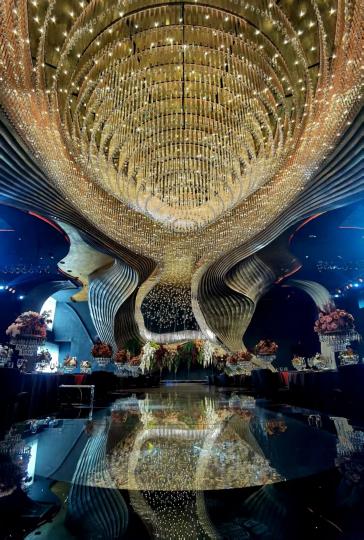
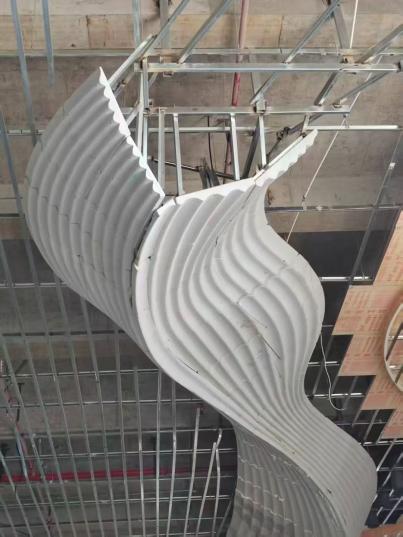
Large-scale curved ceilings and walls realized in KITO foamed ceramics enable dramatic sculptural language without the weight penalty of concrete or heavy GRC.
The result is long-span freeform geometry, premium finish potential, and compliance with hospitality fire-safety requirements.
Sheraton Hotel Retrofit — Partition Wall Upgrade
In a hotel renovation, KITO 120 mm foamed ceramic wall panels replaced conventional 200 mm masonry walls. Outcomes included faster installation, improved acoustic privacy for rooms, reduced structural load, and increased usable room area—making this solution attractive for global hotel chain retrofit programs
.
Applications
Suitable uses include: interior & exterior partition walls, breeze blocks and decorative screens, sculptural ceilings and free-form features, façade cladding and light faux-stone panels, door & window casings, custom-shaped architectural components, landscape installations (benches, water elements, pods), and prefabricated modular assemblies. Typical project types: buildings, villas, museums, hotels, subway stations, hospitals, art installations, and public spaces.
Installation & Design Notes (quick guidance)
- Use staggered vertical joints; avoid continuous seams across heights.
- Insert diagonal φ6 steel pins at vertical joints (200–250 mm embed) for stability.
- Leave recommended top & floor gaps and delay grout/fill operations (e.g., allow 3 days post-installation before final filling).
Fixing: U/L clips spacing per structural advice (≤1 m to columns; ≤600 mm to roof/beam interfaces).
Prefabrication and CNC finish minimize onsite cutting and reduce scheduling risk.
Why B2B Clients Choose KITO Foamed Ceramics
- Sustainability: high recycled content and circular manufacturing.
- Efficiency: lighter transport, faster prefabrication, quicker installation.
- Design: true freedom for intricate CNC patterns, curved façades and sculptural forms.
- Performance: fireproof, waterproof, mold-resistant, durable in varied climates.
- Economics: lower installation and structural support costs compared with heavy masonry or stone cladding.
FAQ (structured for clarity)
Q: Are KITO foamed ceramic panels eco-friendly?
A: Yes. KITO foamed ceramics use over 85% industrial solid waste (ceramic tailings, mine tailings, slag, coal gangue, river silt, glass residue), significantly reducing virgin material demand.

Q: Can foamed ceramics be CNC-carved into breeze blocks and intricate screens?
A: Yes. CNC precision carving enables complex breeze block patterns and decorative perforations suitable for both façades and interior partition screens.
Q: Are these materials suitable for exterior façade use?
A: Yes. When properly detailed, foamed ceramics provide weather resistance, moisture protection, and long-term durability for façades and landscape elements.
Q: How do they differ from GRC or stone?
A: Foamed ceramics are substantially lighter, have high recycled content, offer faster prefab installation, comparable durability for non-loadbearing uses, and greater shaping flexibility.
Call to Action
For architects, interior designers, landscape planners, contractors, and hospitality developers interested in samples, technical files, CAD blocks or project consultation:
Contact (WeChat / WhatsApp): 0086-13923140006 — request a sample kit and detailed CAD/installation guides.